FARMING - PERMACULTURE
Son Selva: Permanent Culture
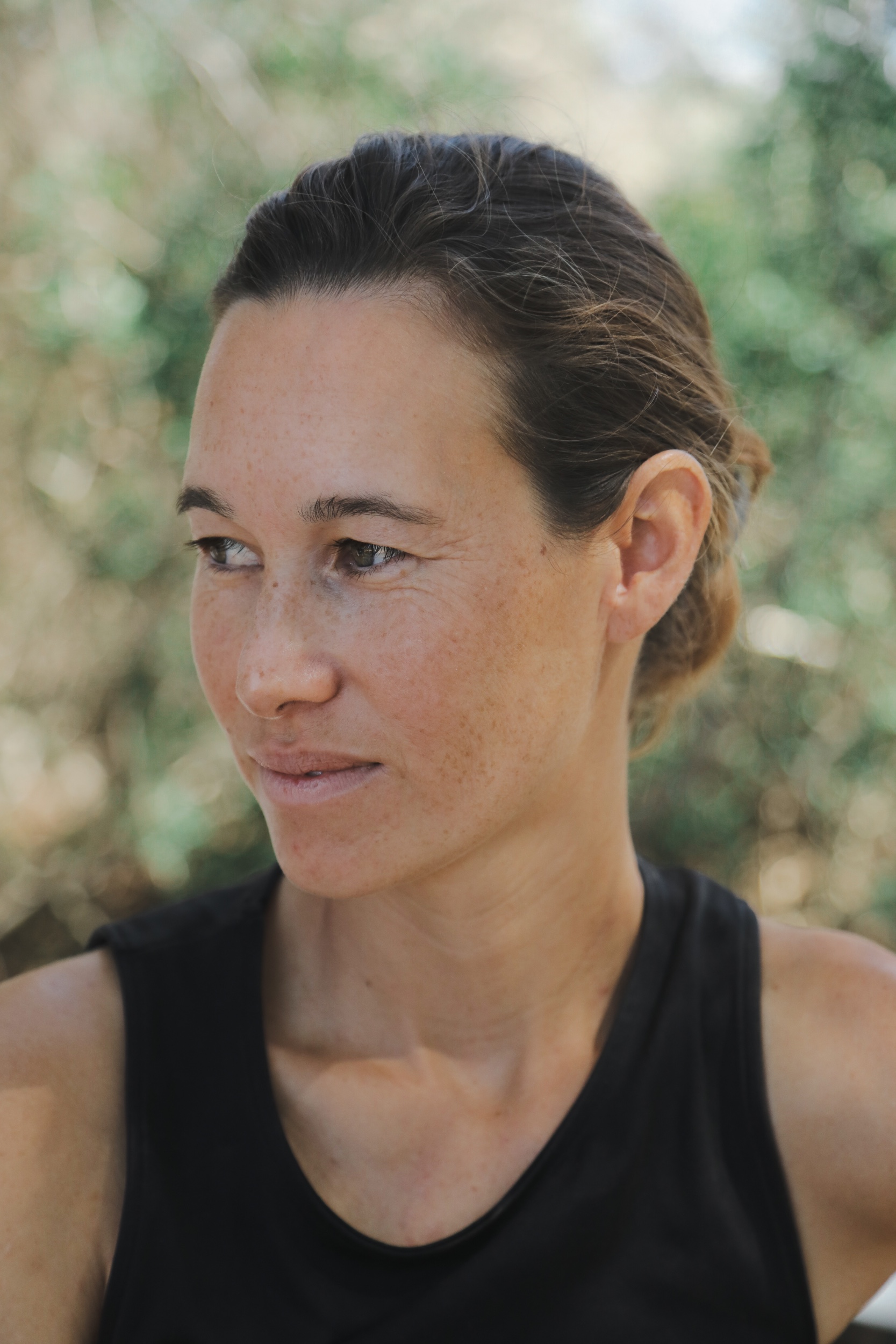
Scarlet Allenspach runs a 22000sqm Permaculture Project - on her own.
Interview & Images by Daniel Siegler / Es Mercat
Interview & Images by Daniel Siegler
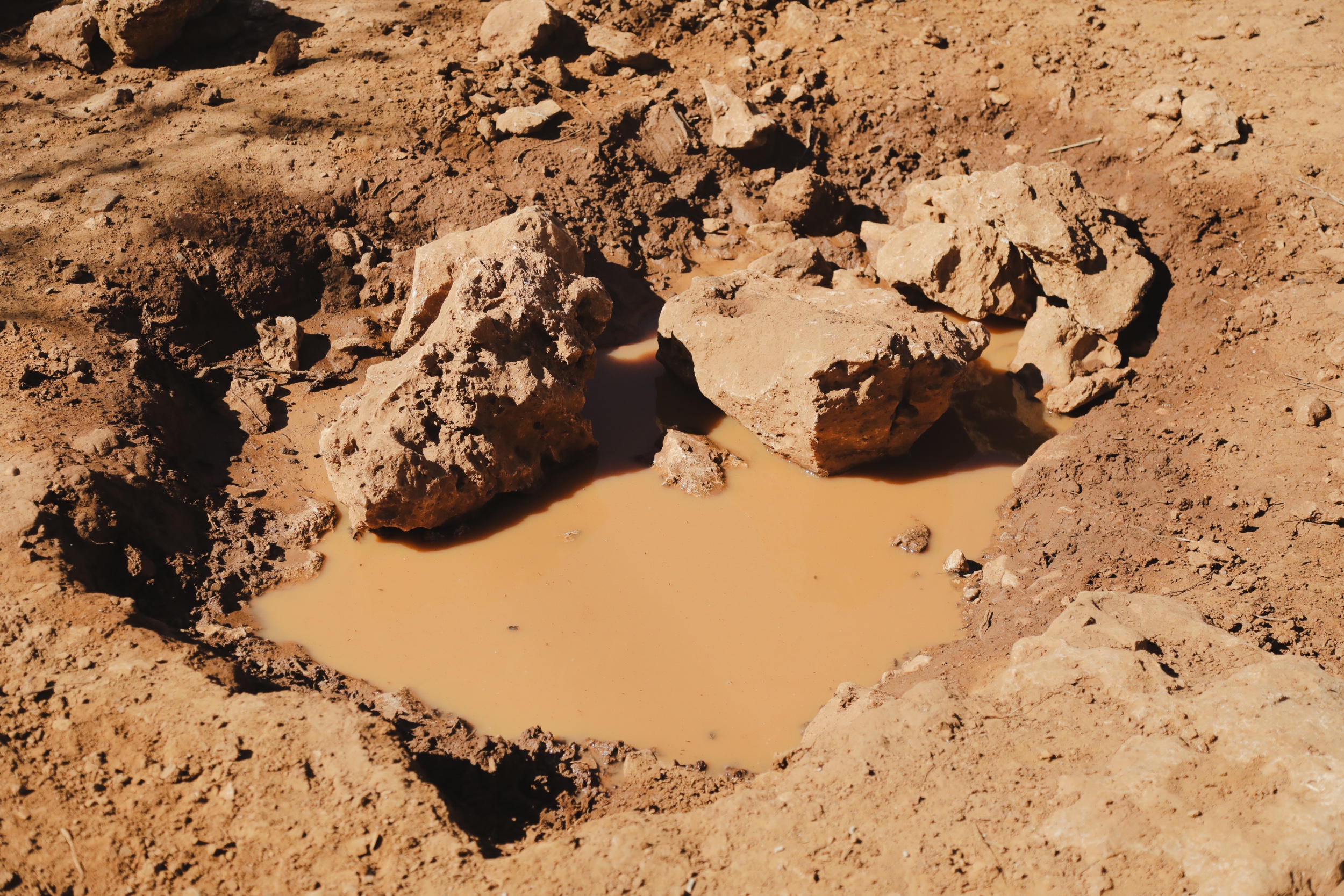
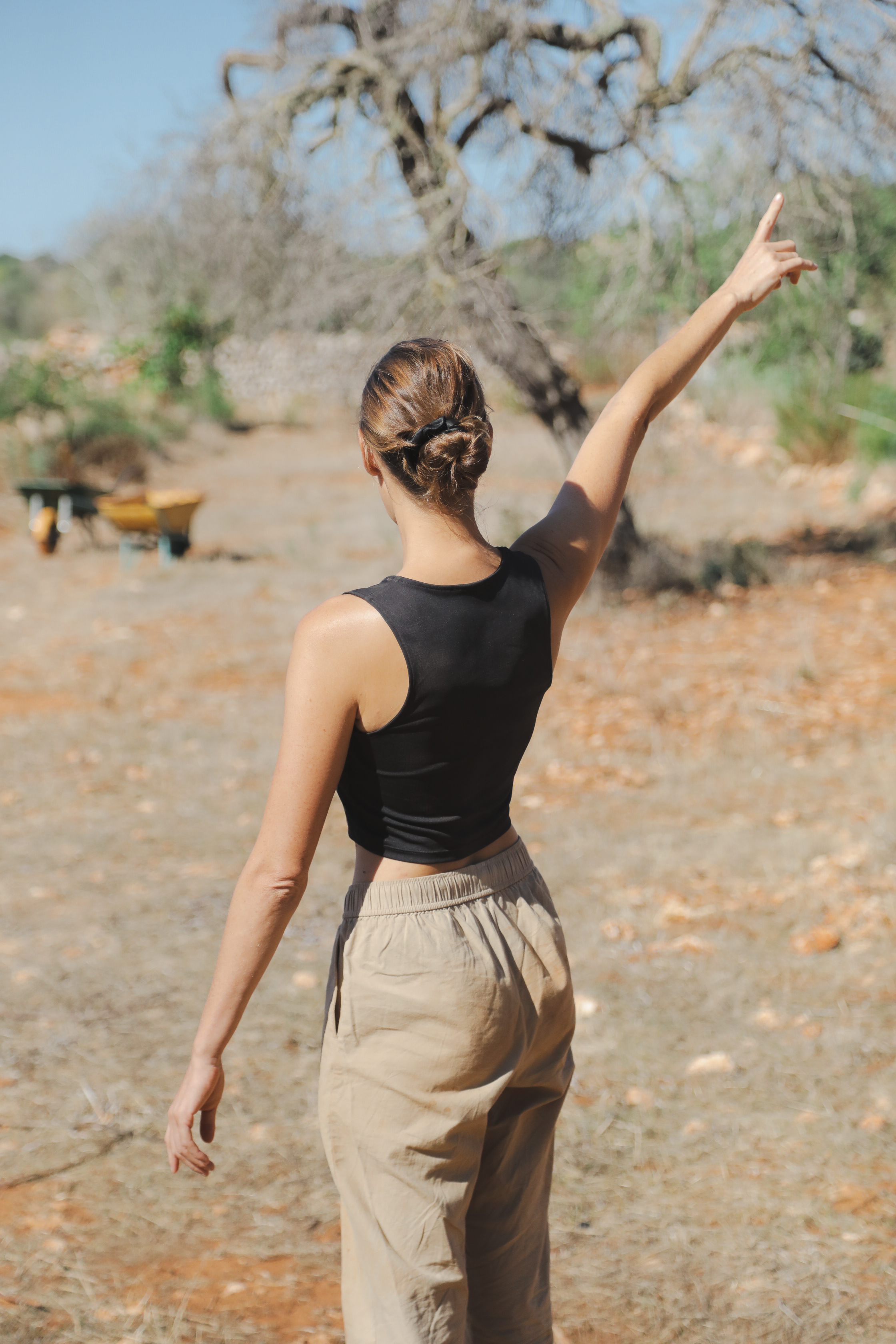
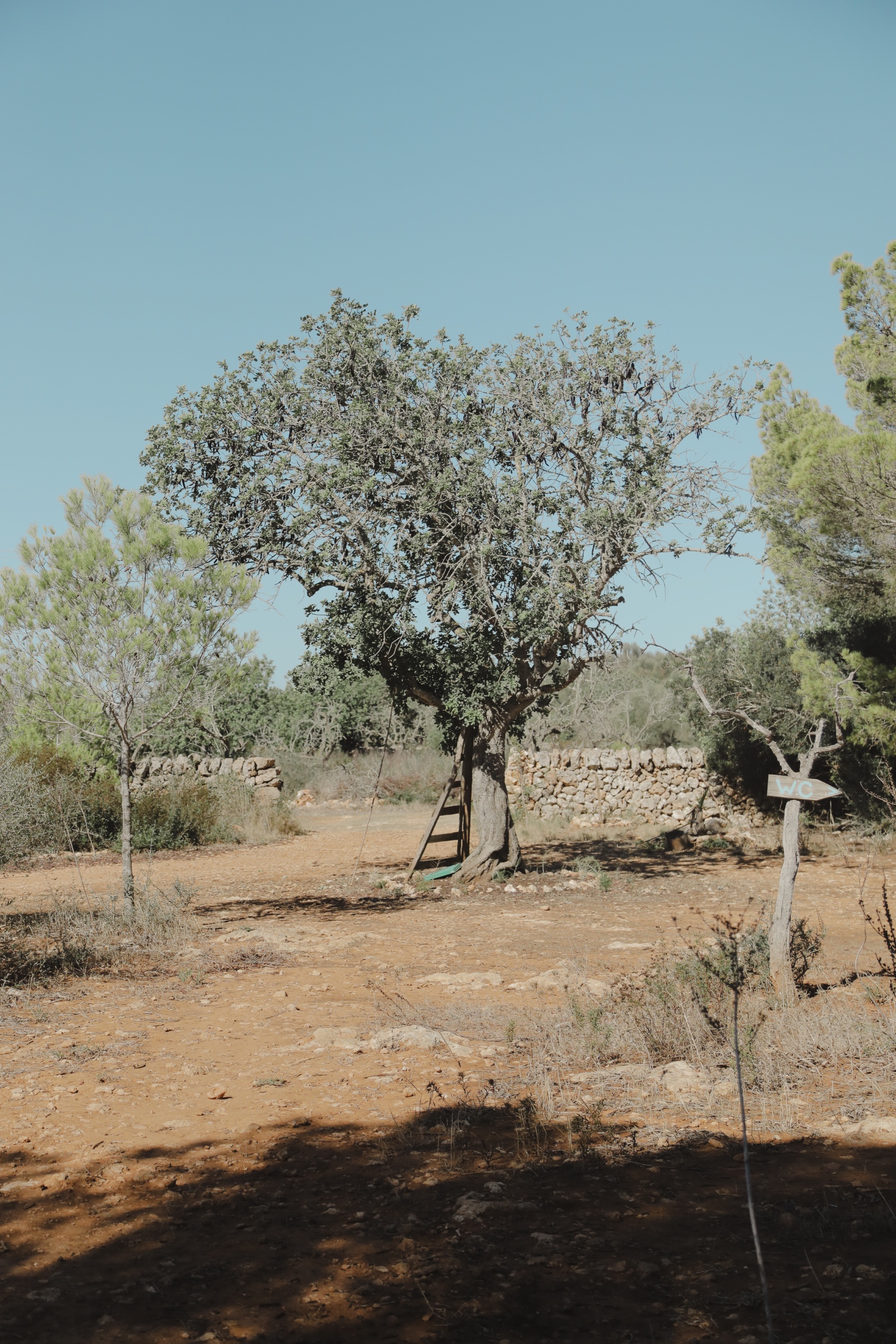
The road up to Son Selva is barely a road. Three metres wide, carved out by hand so that a car could pass. When the water tank was delivered, the truck driver wanted four. Scarlet Allenspach, standing in the dust with a chainsaw, told him she'd cut what was needed. He asked about a turning circle at the top. She told him there wasn't one. That was year one. The land, 22,000 square metres on Mallorca's east coast, had been untouched for a decade. Overgrown, dry, the old almond trees slowly dying from a bacterial infection that still has no cure. The kind of place most people would look at and see a problem. Scarlet looked at it and saw a beginning.
She's from Zürich. Lived ten years in Basel. City, through and through. She didn't move to the countryside because she romanticised the rural life. She moved because she wanted to plant trees. The distinction matters to her. The countryside, she says, she's still getting to know. The project began not with a shovel but with a six-year plan. Scarlet had no money, no land, no driver's licence. A friend told her she was smart enough to figure it out. That she didn't need to have money, she needed to come to money. So she did. Year one: driving lessons, Spanish classes. Year two: legal research, scouting. Year three: working intensively in Switzerland, teaching permaculture courses, running an organic seed company, saving enough to come here for three months and find the right piece of land.
Scarlet had no money, no land, no driver's licence. A friend told her she was smart enough to figure it out.
She found it. Then had to wait another eighteen months while two separate parcels were merged before she could buy. The waiting was awful, she says. Psychologically brutal. But it turned out to be a gift. One of the founders of permaculture, Bill Mollison, always advised waiting a full year before doing anything to a piece of land. Observe before you interact. Watch where the water goes when it rains. See what grows in winter. Learn what's already there before you start changing it. Scarlet knew the principle. She never would have followed it voluntarily. The bureaucracy forced her hand.
When I ask how it felt to finally sign the deed, she pauses. There was a moment of panic, she says. A short crisis. The weight of owing money she didn't yet have, the commitment of it, the most life-altering decision she'd ever made. She called a friend. He asked what the worst case scenario was. She said she didn't know. He said: you sell the land. And that was enough.
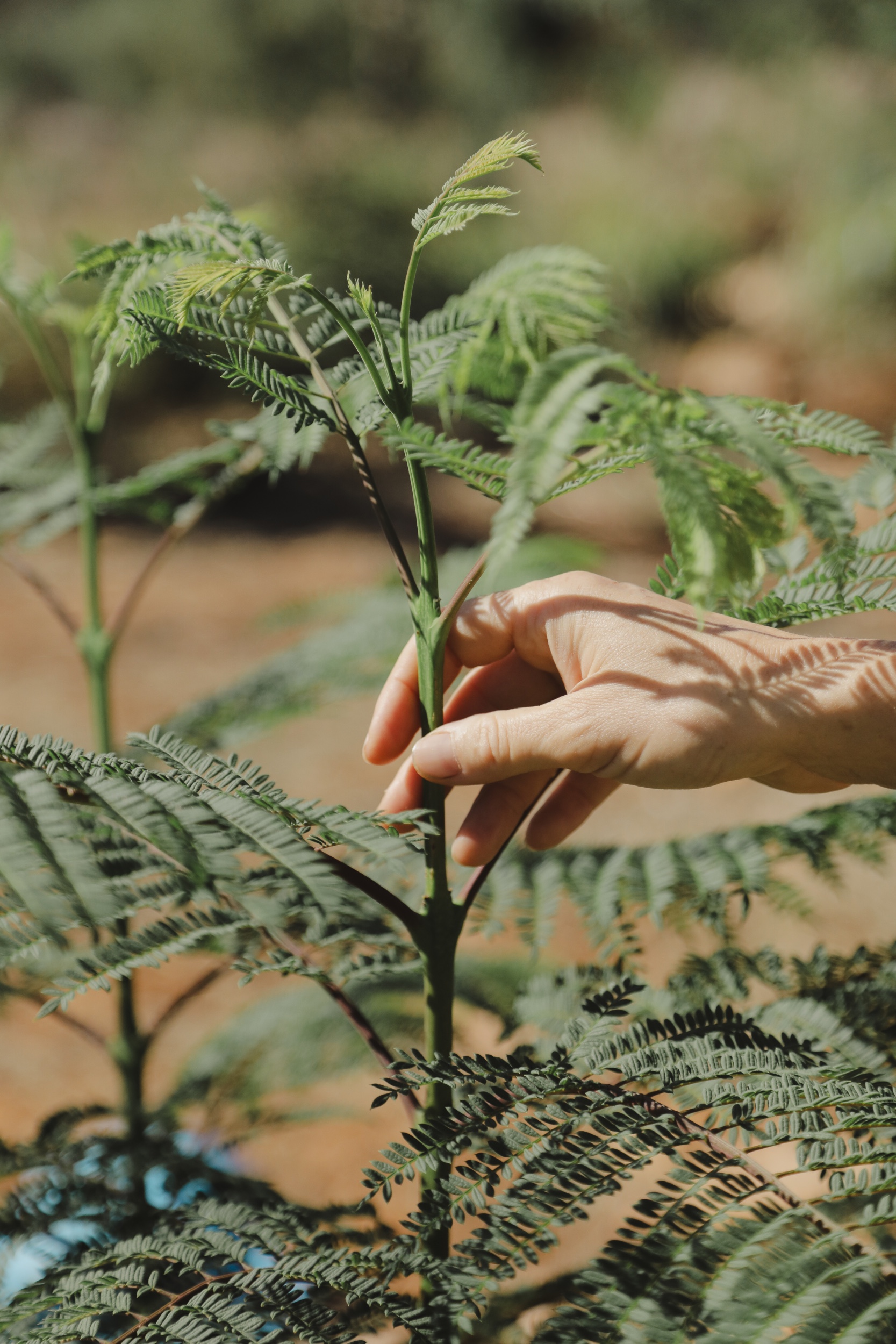
Permaculture, the word comes from permanent culture, is about designing ecosystems that sustain themselves.
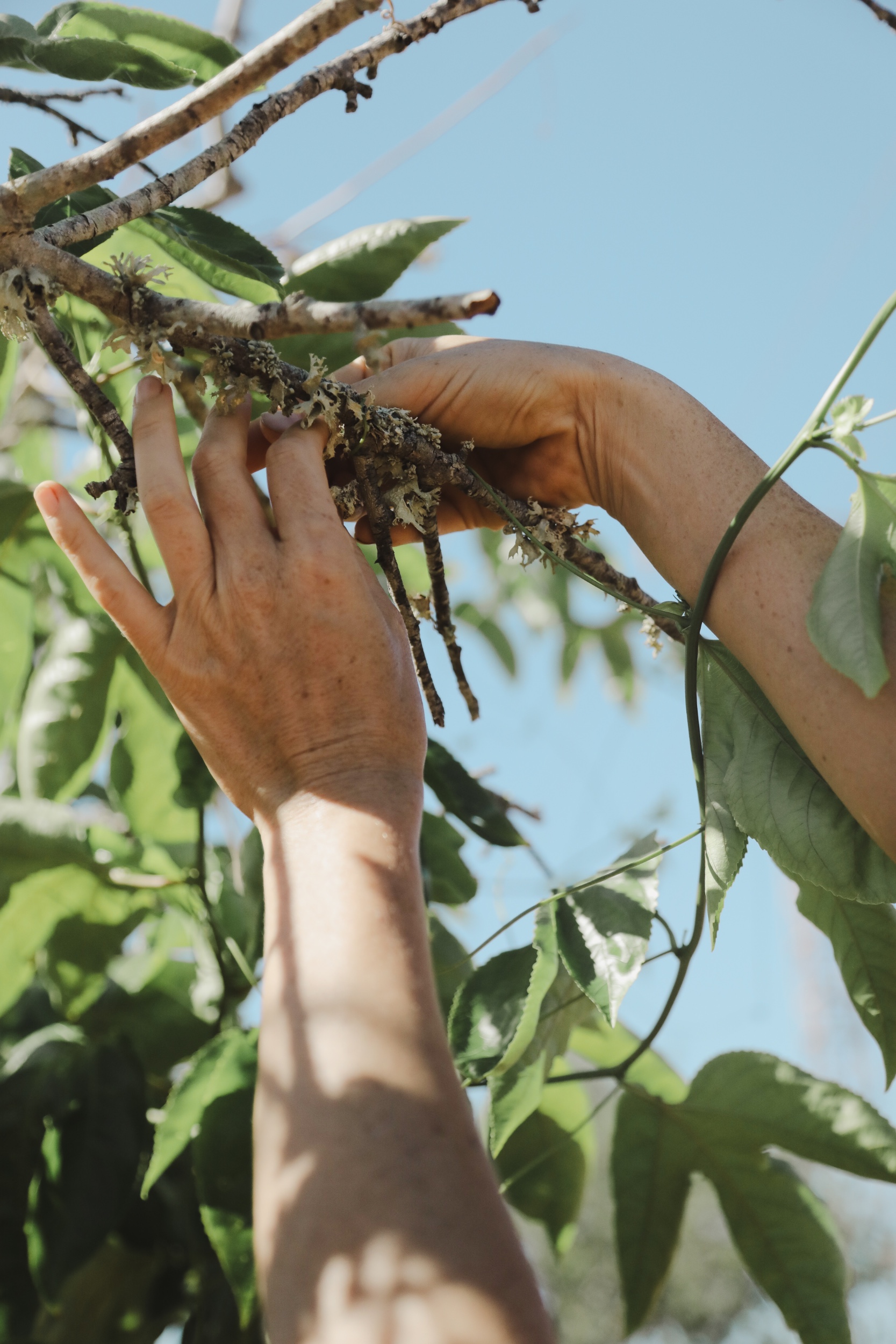
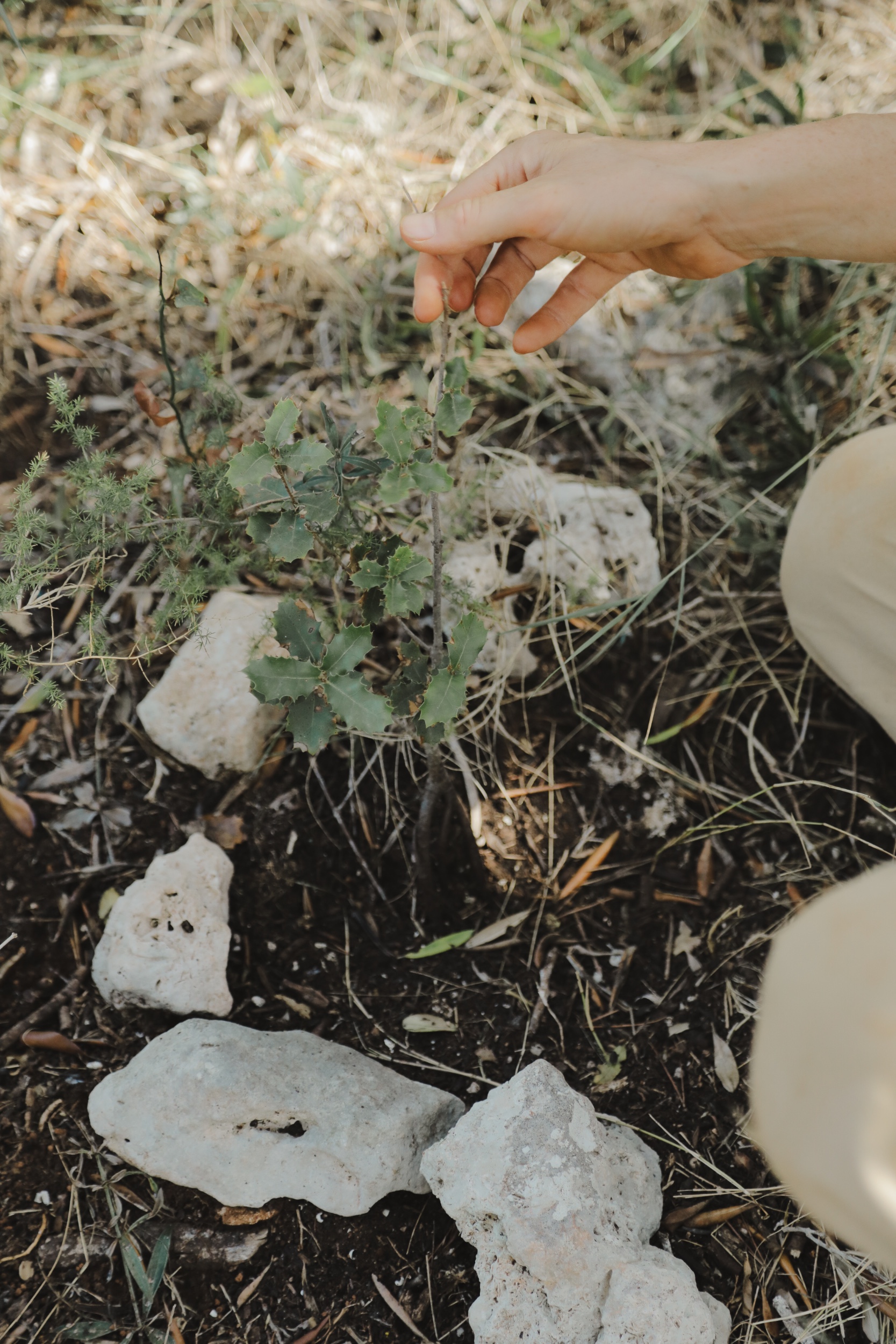
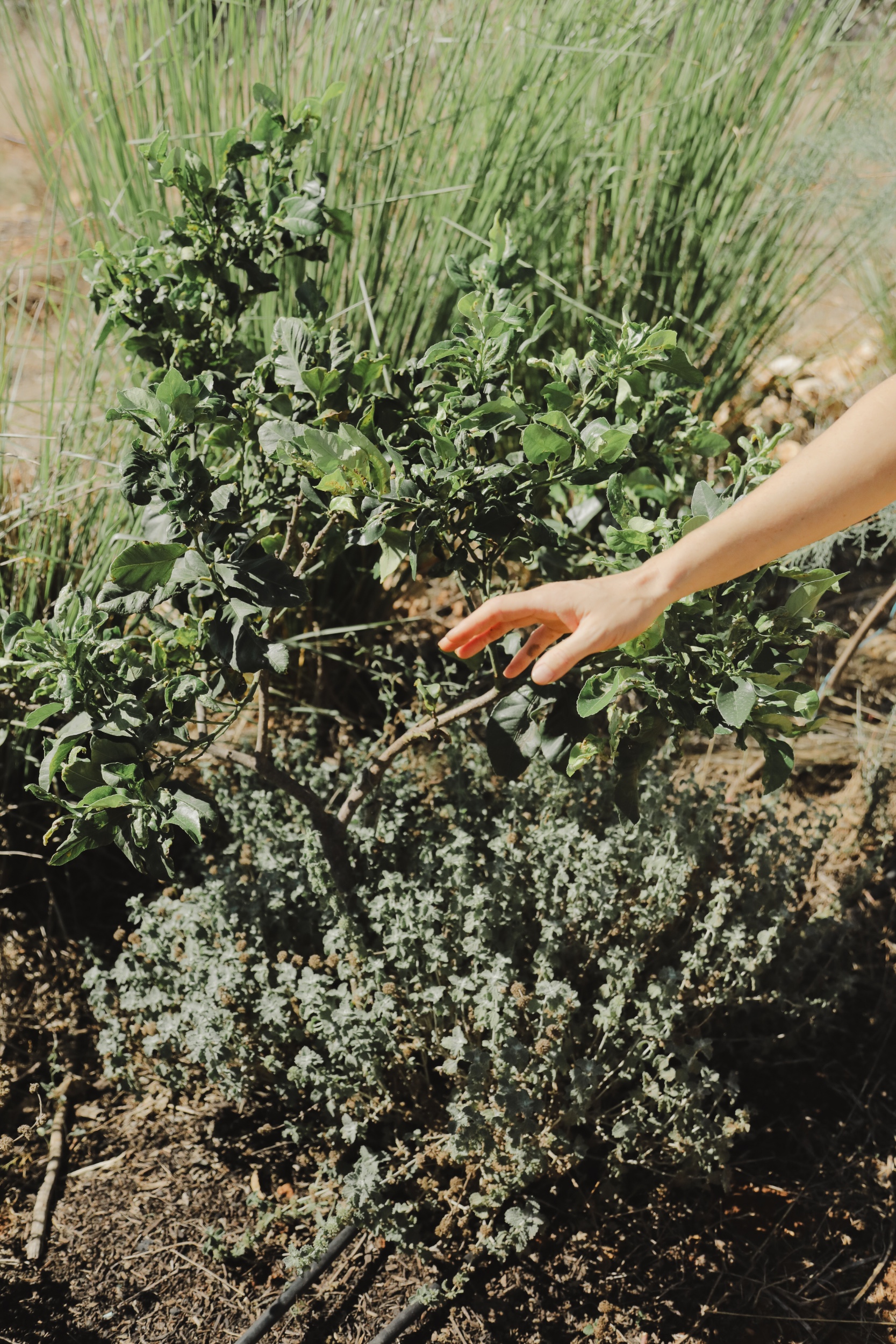
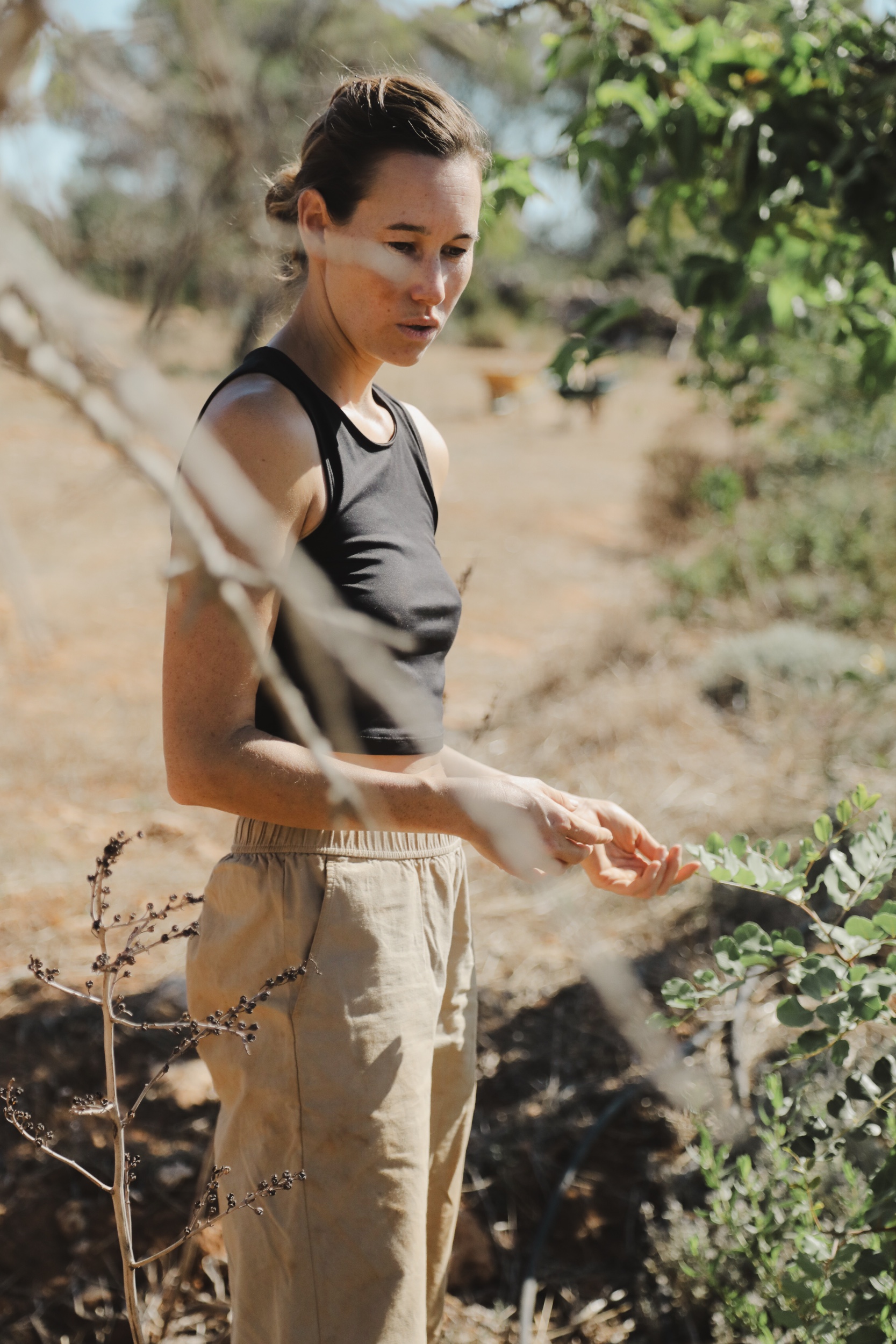
Since then, she tells me, she's never once regretted the step. Walking the property with Scarlet is an education in seeing differently. What looks at first like wild, tangled growth is in fact deeply intentional. Permaculture, the word comes from permanent culture, is about designing ecosystems that sustain themselves. She plants in communities, not as a monoculture. Every grouping is a guild: a tall tree that wants full sun, a smaller one beneath it that thrives in filtered light, then shrubs, herbs, ground cover, each occupying a different layer. Six lines of forest edge running across the land, mimicking the zone where woodland meets meadow. The most fertile habitat in nature.
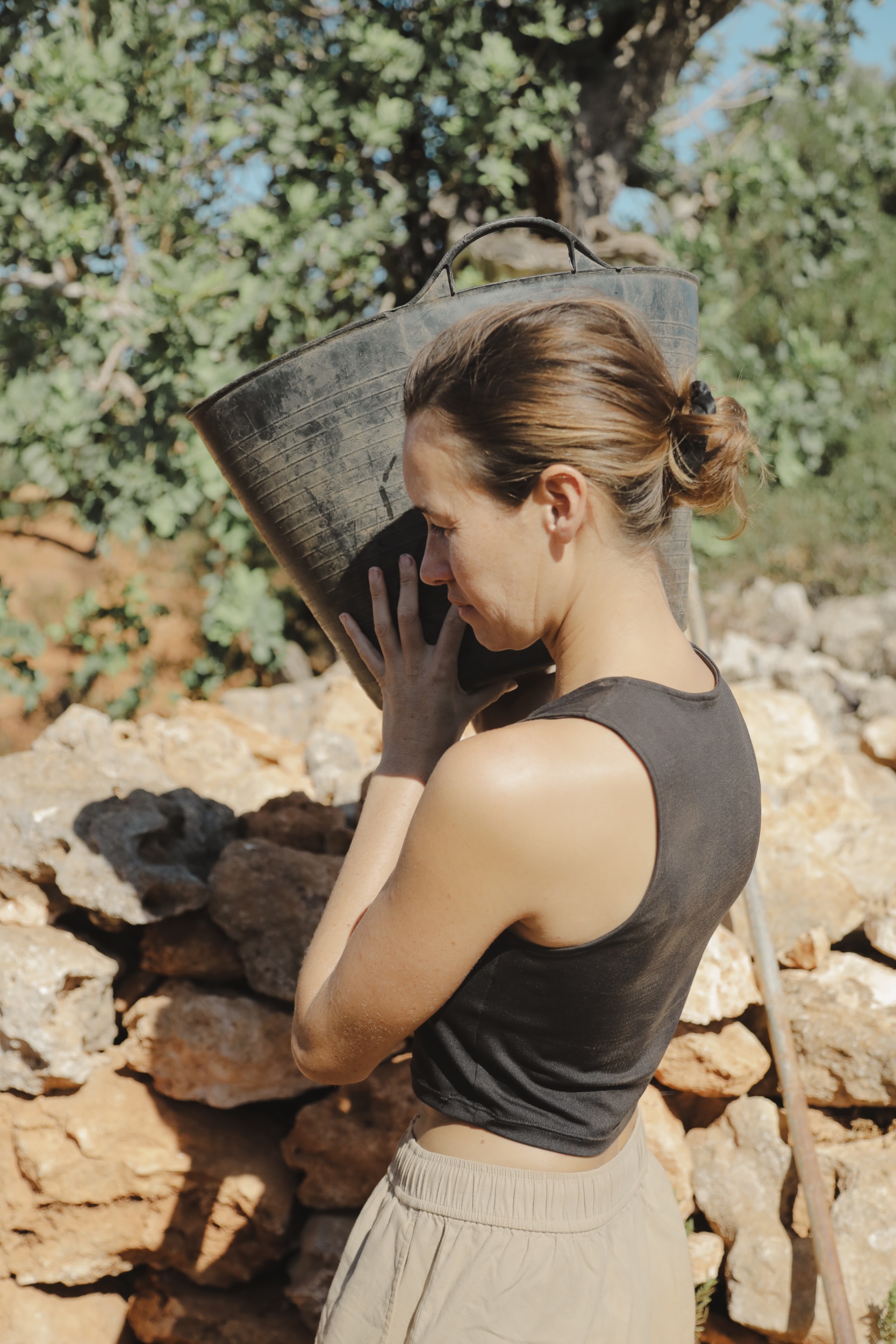
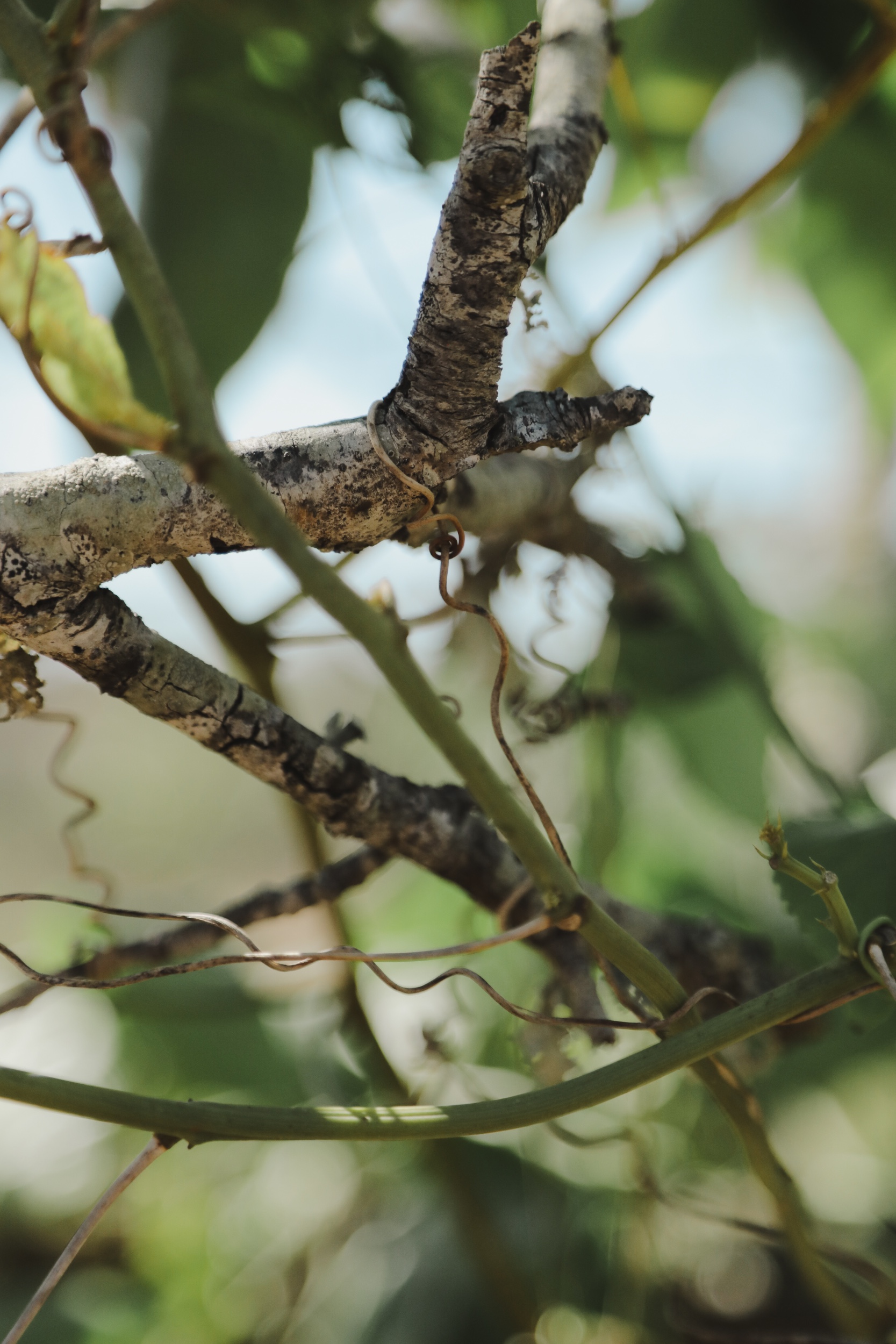
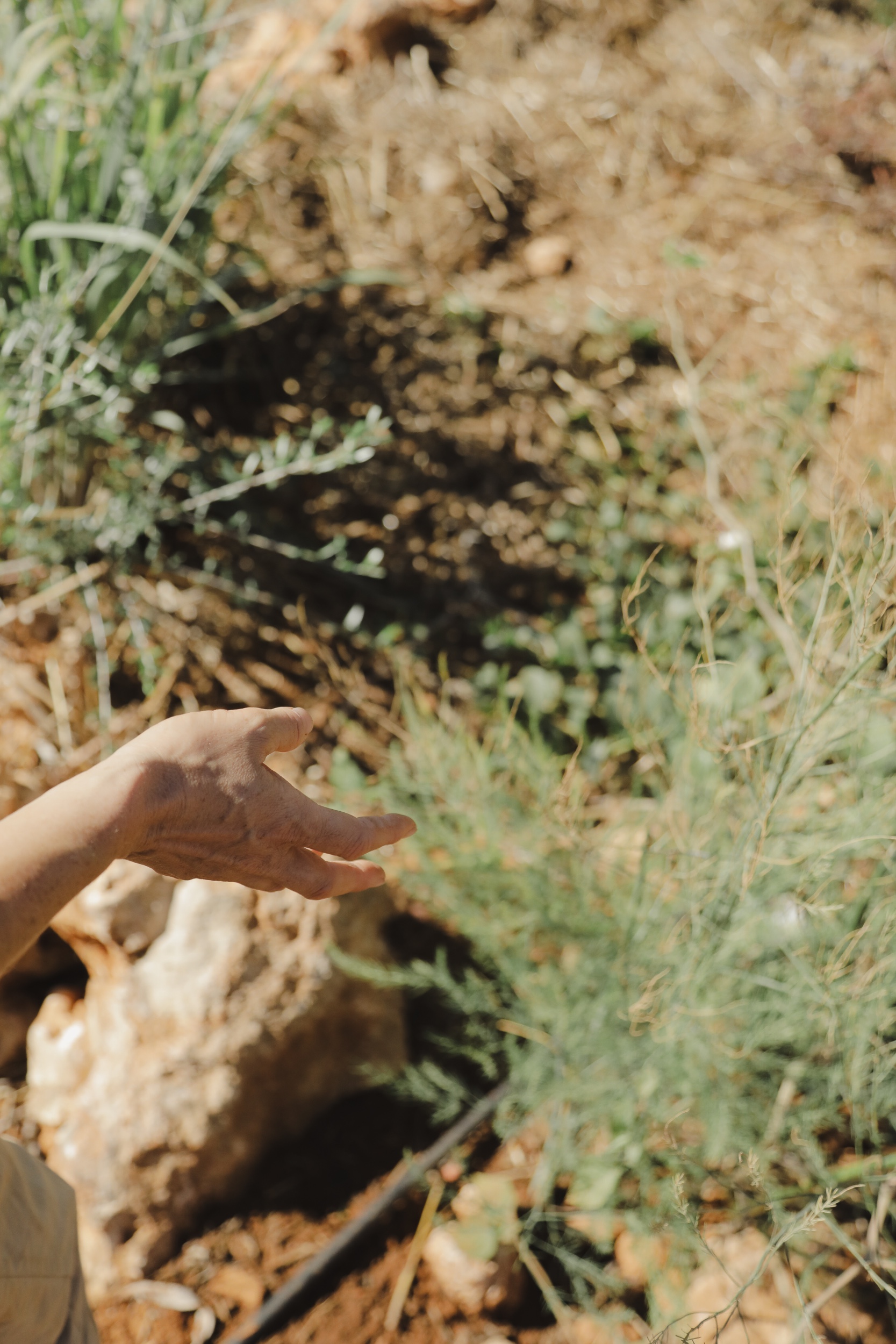
The dead almond trees, rather than being cleared, serve as climbing frames for vines. The invasive ricinus plant, with its dramatic red leaves, stays because it produces enormous amounts of biomass. She cuts it back and lays it around the base of younger trees to build soil. Vetiver grass, planted as a windbreak, sends roots so deep it draws up minerals from the subsoil that other plants can't reach. When she cuts it back, the clippings become mulch that returns those minerals to the surface. Nothing is waste. Everything cycles.
Every Thursday is volunteer day. Anyone can come, walk the property, work alongside her, and leave understanding something they didn't before.
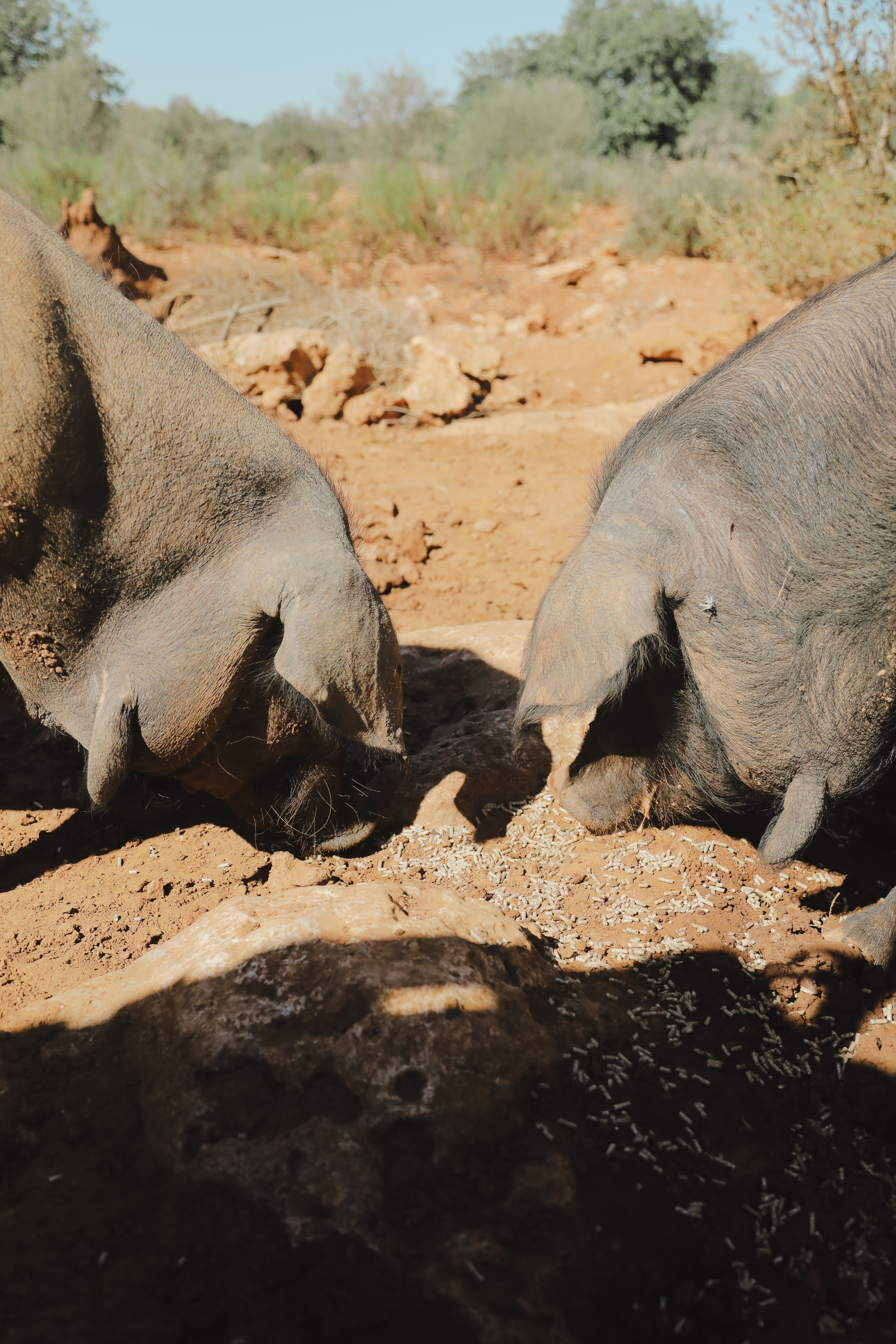
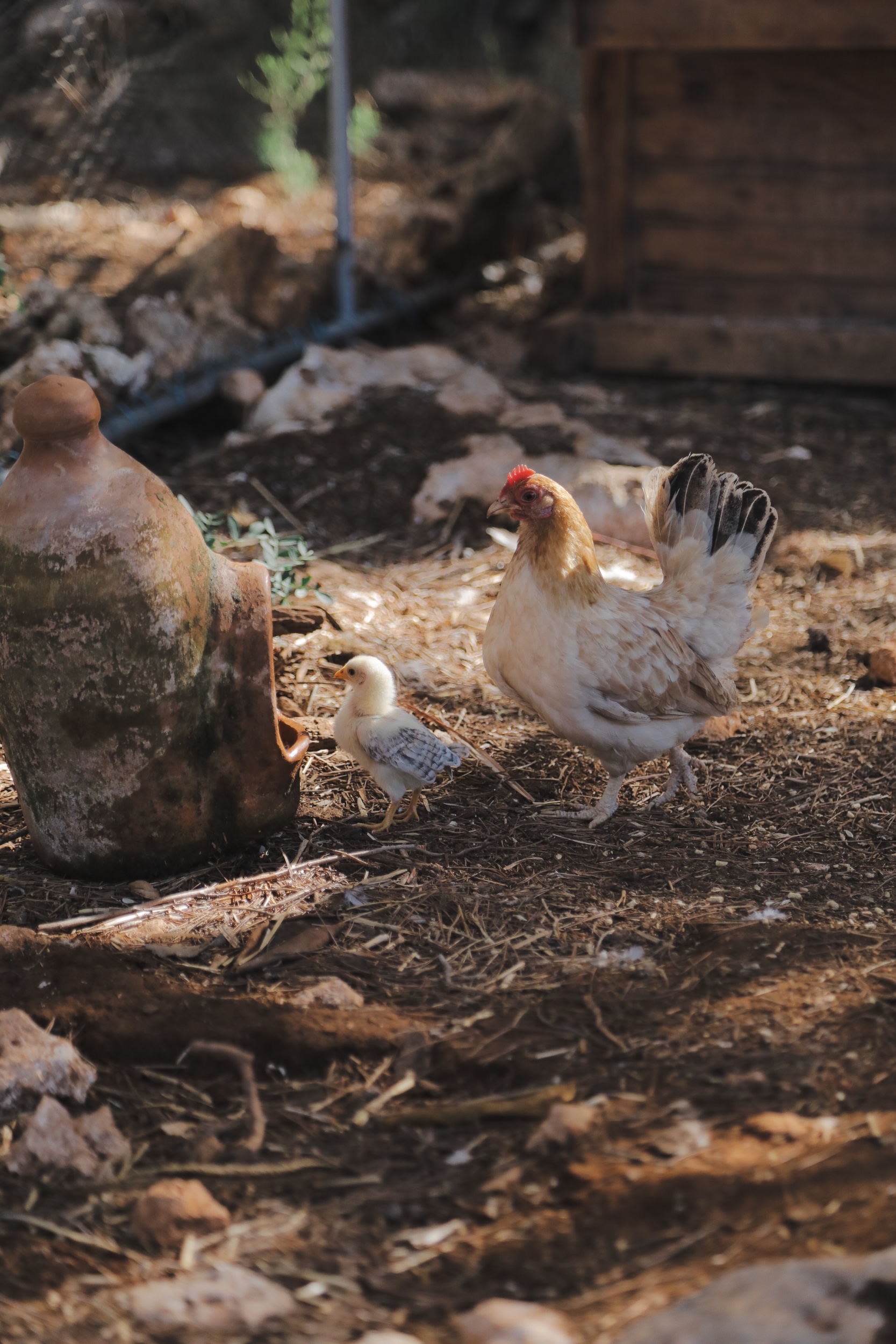
The animals are part of the design too. Chickens roam the terraces. Two pigs, beautiful, woolly, almost sculptural, work the soil with their snouts, preparing ground for the next season's planting. Bees occupy hives at the edge of the property. Dogs patrol loosely, keeping their distance from the hens through some negotiated truce that seems to hold. The whole thing operates with a logic that feels both ancient and deeply considered.
What Scarlet pushes back against, firmly and with a kind of amused exasperation, is the language people use about nature. Weeds. Pests. Invasive species. She hears it constantly. From visitors, from neighbours, from well-meaning people who project their own anxieties onto the landscape. Plants are greedy. They steal each other's nutrients. The foreign ones will take over and everything will die.
But nature doesn't think like us, she says. It has no envy. It has no fear of death. Plants come, plants die, and what dies becomes soil for what comes next. The pessimism, she believes, comes from us. From our politics, our news cycles, our habit of seeing scarcity and competition everywhere. We assign it to the natural world because it's what we know. But a forest has never operated on those terms.
She wants to leave the land better than she found it. More fruitful. So that if she dies tomorrow and no one takes over, the system she's built continues on its own.
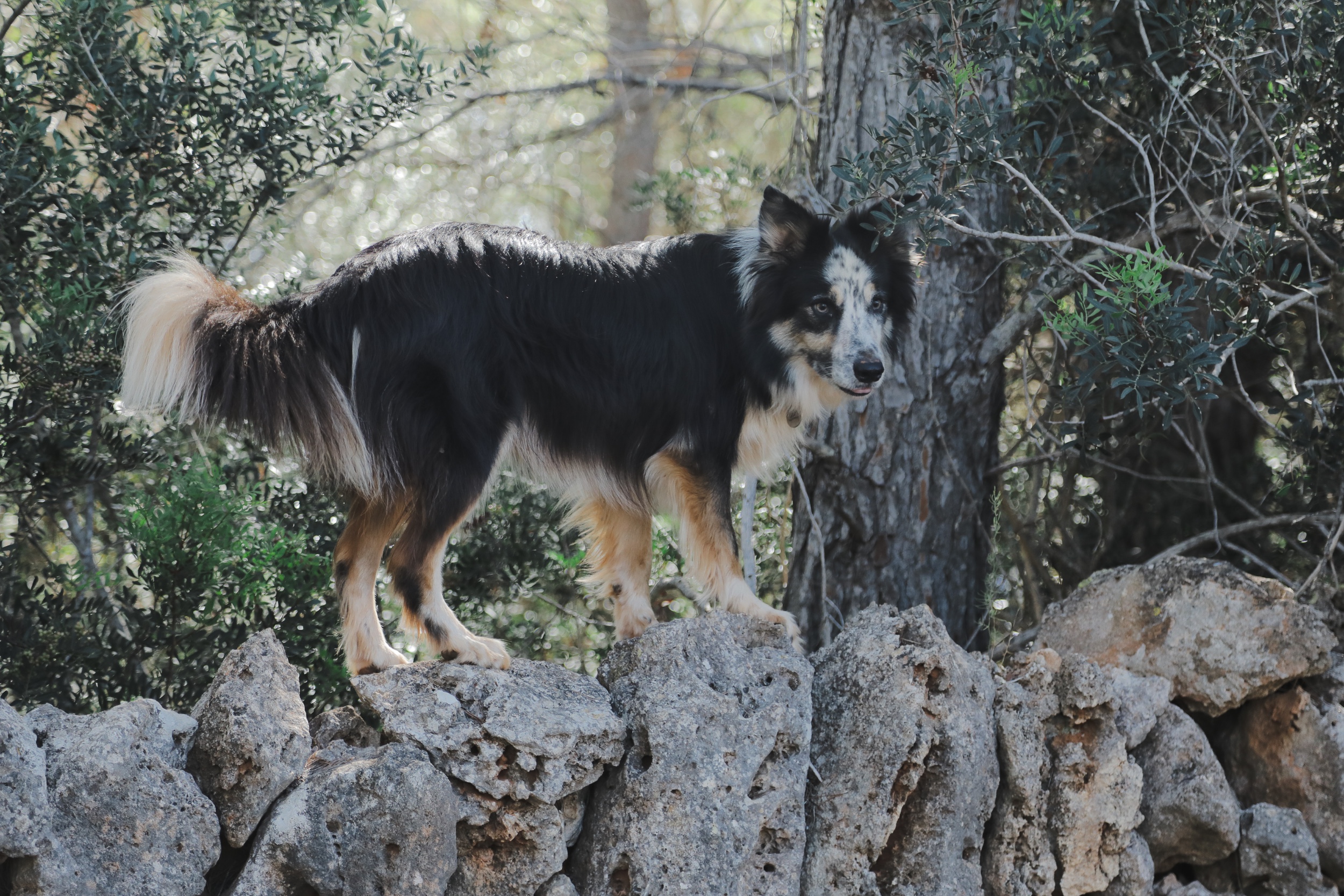
It's a philosophy that extends well beyond agriculture. The permaculture principles, there are twelve of them, laid down by Mollison and his co-founder David Holmgren, function as a kind of life framework. How you observe. How you make decisions. How you design your time, your space, your relationships. You can apply them in a city apartment, Scarlet says. But it's more interesting with a bit of land.
But nature doesn't think like us, she says. It has no envy. It has no fear of death. Plants come, plants die, and what dies becomes soil for what comes next.
She teaches all of this. Every Thursday is volunteer day. Anyone can come, walk the property, work alongside her, and leave understanding something they didn't before. She's written a book on food forests, published this year. She designs permaculture systems for private clients across the island, which multiplies her impact. Her own 22,000 square metres become 200,000 through the properties she advises. The dream is a kind of quiet chain reaction. She teaches a client. They influence a neighbour. The neighbour starts paying attention. Slowly, the landscape shifts.
I ask Scarlet what she wants to leave behind. She doesn't hesitate. She wants to leave the land better than she found it. More fruitful. So that if she dies tomorrow and no one takes over, the system she's built continues on its own. Growing, fruiting, feeding whatever comes next.
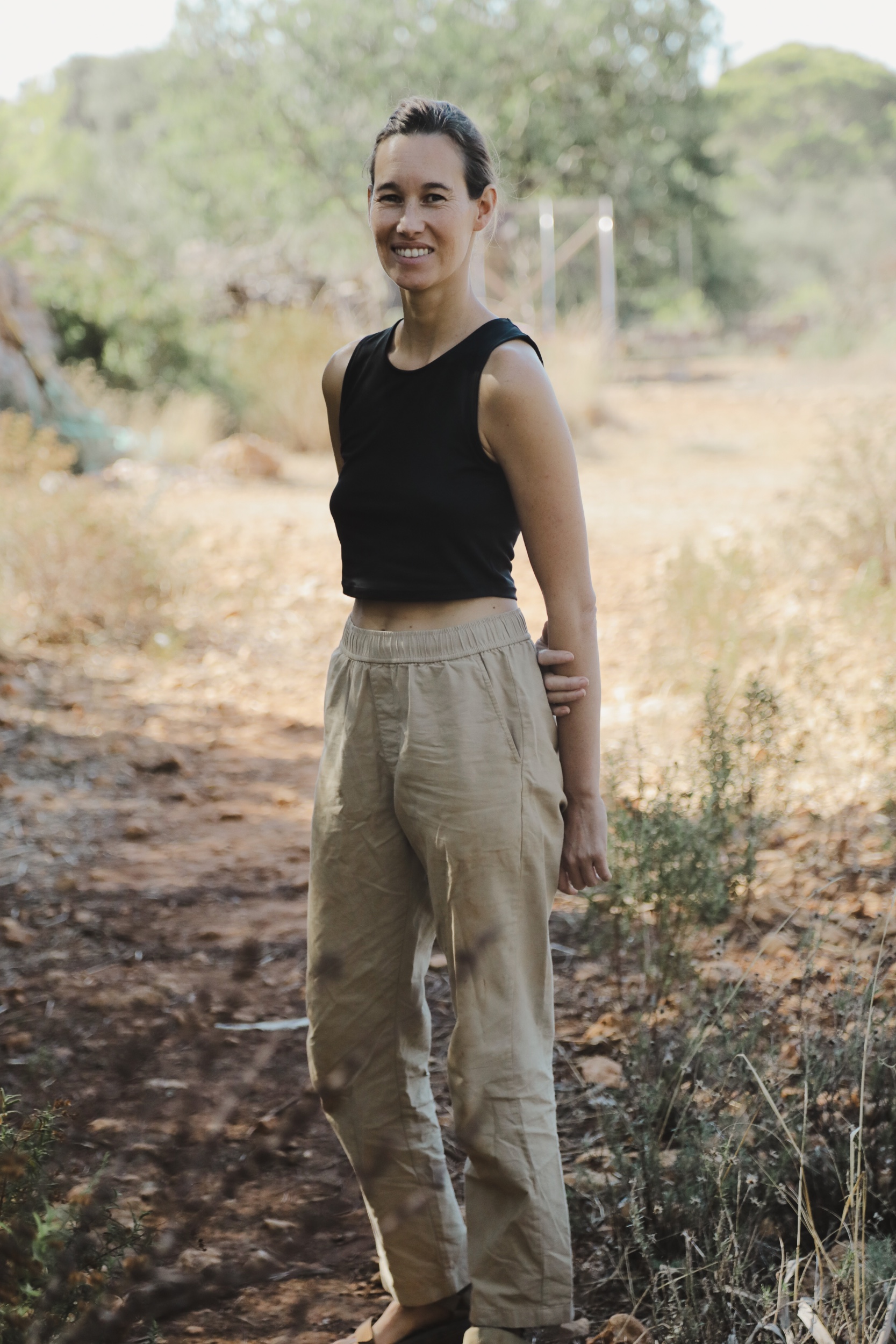
She smiles. That's the whole idea, she says. You plant for the future. >>> We are looking forward to have Scarlet at Es Mercat - when she is ready. >>> Inquire about volunteering and if you want your garden to become a self-sustaining paradise. www.sonselva.com